The New City Ride: How Driverless Services Fit Into Urban Travel
Key Takeaways
- Driverless ride services are becoming a more visible part of transportation planning in selected urban areas.
- They may be most useful for short trips, late-hour travel, and connections to rail or bus networks.
- Safe operation depends on defined service areas, careful testing, clear rider guidance, and responsive support.
- Driverless vehicles are not a universal replacement for walking, biking, public transit, taxis, or conventional rideshare trips.
- Cities should evaluate these services as one piece of a broader mobility system.
Urban travel is often shaped by small but frustrating gaps: the distance from a train station to home, an early airport departure before transit begins, or a short trip that feels too far to walk but too inconvenient to drive. Driverless ride services are being developed to address some of those gaps, using self-driving technology to move passengers within carefully defined operating areas.
In 2026, the practical question is no longer simply whether automated vehicles can navigate a street. It is how they can fit into daily life without making cities harder to move around. For riders, that means dependable pickup locations, understandable instructions, accessible vehicles, and a way to get help when something does not go as planned.
Why Driverless Ride Services Are Receiving More Attention
Many transportation agencies and private operators are shifting their focus from closed-course demonstrations toward passenger service in limited locations. A driverless ride is different from the lane-centering or adaptive cruise features found in many private vehicles. Those features assist a human driver, while a true driverless service is designed to handle the driving task during an approved trip without asking a passenger to take the wheel.
That distinction matters because automation has levels and limits. The federal overview of automated vehicle safety explains that currently available consumer systems still require an attentive human driver. At the same time, higher levels of automation are intended to operate only under specific conditions or within specific locations.
How a Typical Driverless Trip Works
Although every operator has its own app and procedures, the passenger experience will usually follow a familiar pattern:
- The rider requests a trip through an app or approved booking platform.
- The service confirms that the pickup and destination are inside its operating area.
- The vehicle selects a route using detailed maps, cameras, sensors, and onboard computing.
- The rider receives vehicle identification and pickup instructions before entering.
- The vehicle completes the route, while customer support or remote assistance may be available if needed.
- After drop-off, the vehicle may serve another trip, recharge, or return to an operations facility.
Where Driverless Rides May Help Most
Closing the first-mile and last-mile gap
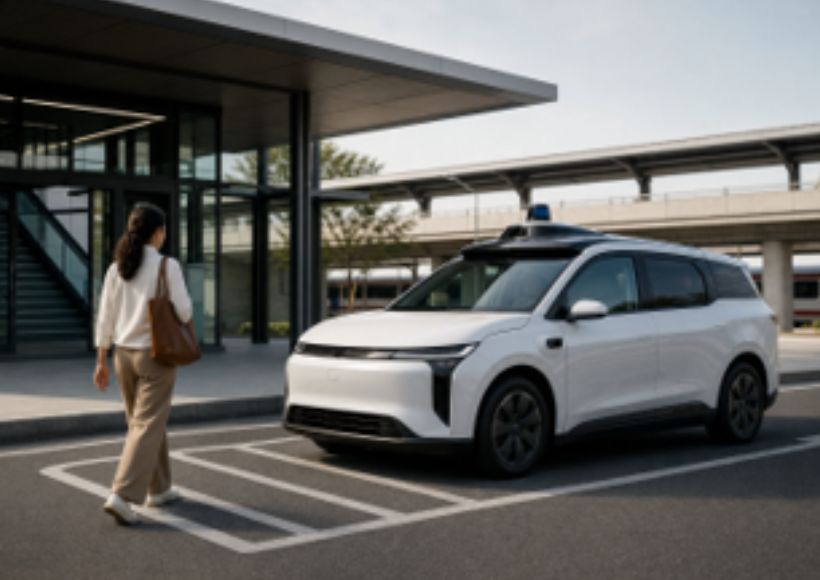
One promising use is the short connection between a home, office, hotel, or apartment building and a major transit stop. A rider arriving on a late train, for example, may be able to use a driverless vehicle for the final few miles rather than wait for a limited bus route or pay for overnight parking.
Providing another option at difficult times
These services may also help during early mornings, late evenings, large events, or periods when parking is scarce. For someone recovering from an injury, unable to drive, or visiting an unfamiliar city, a well-designed service could offer a more direct trip than navigating multiple transfers.
However, usefulness depends on location. A service that works well on mapped city streets may not be available on private roads, unpaved routes, or outside its approved boundaries. Riders should view the coverage area as an operating condition, not as a guarantee that every destination can be served.
Safety: What Riders Should Know
“Driverless” does not mean “without safety systems.” These vehicles rely on overlapping hardware and software, including cameras, radar or other sensors, maps, route planning, and systems that detect objects and road conditions. Operators also set rules for where, when, and under what weather conditions their vehicles can travel.
Before booking, riders should understand the basics: where to wait, how to verify the correct vehicle, how to wear a seat belt, and how to reach support. A responsible service should provide clear emergency instructions and a way for passengers to report a concern. Testing must also account for difficult real-world situations such as construction zones, school areas, cyclists, emergency vehicles, and changing traffic patterns.
The Limits of Driverless Travel
Driverless systems can face challenges that are familiar to human drivers but harder to standardize: heavy rain, snow, flooding, reduced visibility, hand signals from a police officer, sudden street closures, and confusing temporary lane markings. Pickup can also be difficult when a curb is crowded, a venue has several entrances, or a rider is standing on the wrong side of a divided road.
For that reason, a smaller service zone can be a sign of caution. It gives operators and cities a clearer way to measure performance, identify recurring problems, and pause service when conditions fall outside the vehicle’s capabilities.
Working With Public Transit, Not Against It
Driverless rides are likely to be most valuable when they complement high-capacity transportation. Buses and trains can move many people along busy corridors, while smaller vehicles can help with the trips at either end. This combination could make transit more practical for people who live beyond a comfortable walking distance from a station.
Cities should still measure the results carefully. If autonomous rides replace shared trips with more individual vehicle travel, they could add congestion. If they improve transit connections, reduce parking demand, and expand mobility options, they may support a more flexible transportation network.
Access, Cost, and the Rider Experience
Technology alone will not determine whether riders adopt these services. People will want straightforward answers about fares, payment methods, wheelchair access, service animals, passenger limits, lost items, and whether children may ride without an adult. Accessible pickup areas, plain-language instructions, and prompt customer support matter as much as the vehicle itself.
Public trust also depends on transparency. The U.S. Department of Transportation’s national strategy for automated vehicles identifies federal work planned for fiscal years 2026 through 2030, including safety, infrastructure, and deployment issues that will shape how these services develop.
Rules, Data, and Local Jobs
City leaders will need clear rules for crash reporting, insurance, privacy, emergency access, service interruptions, and operations near hospitals, schools, and crowded public spaces. They should also decide what information riders and residents can expect to see, such as service boundaries, accessibility features, and complaint procedures.
The effect on jobs will vary by city and scale. Some driving work may face new competition, while demand may grow for fleet maintenance, charging operations, customer support, mapping, safety review, and vehicle cleaning. Local businesses may also gain new transportation and delivery options. Planning for worker training and fair access should be part of any expansion discussion.
A Simple Checklist for First-Time Riders
- Choose a safe, visible pickup location.
- Match the vehicle details in the app before entering.
- Secure bags, pets, and mobility equipment.
- Keep support information available during the trip.
- Follow local rules for children, passengers, and seat belts.
- Report unusual behavior, damage, or safety concerns after the ride.
Conclusion: A Useful Tool, Not a Complete Transportation Plan
Driverless ride services may become a useful urban travel option in 2026, particularly for short trips, transit connections, and people who face barriers to driving. Their value will depend on careful limits, transparent safety practices, accessible design, and thoughtful integration with buses, trains, walking, and biking. The strongest cities will not rely on a single new mode of travel. They will give people more reliable ways to get where they need to go.