More Than Sales: A Better Way to Measure E-Commerce Performance
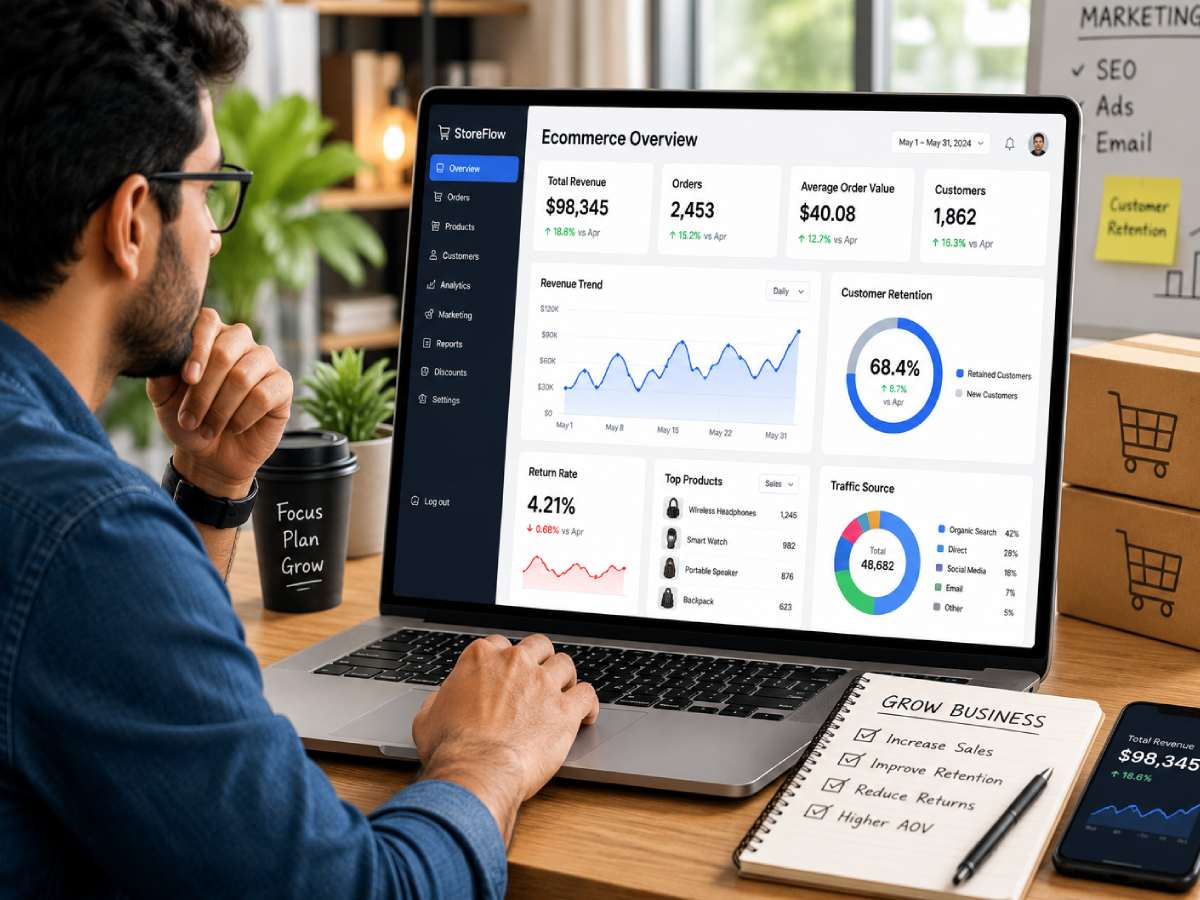
E-commerce sellers’ daily routine is to open the dashboard or seller panel and check their sales. If the sales graph goes upward, they gain confidence; however, if it declines, they worry about revenue. In between all this, here’s a reality check: sales are important, but they can’t measure results on a sales basis, as it can be risky.
At times, sales might be rising, but profits, customers, and returns go in the opposite direction. Many sellers remember the revenue figure; however, they don’t know how many customers return to purchase.
A strong e-commerce business doesn’t necessarily need to sell many products. The real difference is visible in the metrics that show long term business health.
In this blog, we will discuss the metrics to consider so that a seller knows what is happening beyond sales.
Why Should a Seller Not Consider Revenue Only?
Revenue is the most visible metric in any business; that’s why most sellers and business owners focus on this. However, focusing on revenue can be misleading as it doesn’t show the sales context.
For example, a business having sales of Rs. 5 lakhs might seem very strong. We don’t know how much profit is earned from revenue, how many orders are returned, whether customers come again to purchase, or whether sales growth is due to discounts or is natural.
Let’s understand this better with an example.
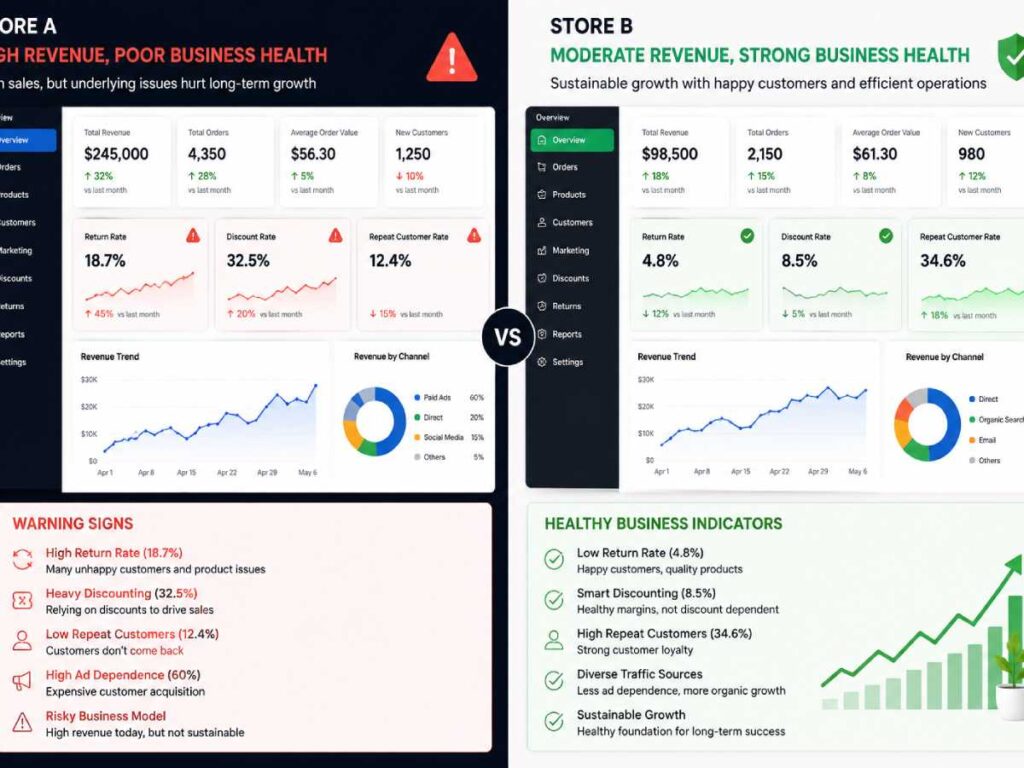
There are 2 stores: store A and store B.
Store A has the following metrics:
- Rs 5 lakh monthly sales
- Heavy discounts
- Product return rate is 30%
Store B shows:
- Rs 3 lakh monthly sales
- Low product return rate
- Repeated customers
If we compare these stores for a year, which one has a more stable business?
The sales figures for store A are higher, but when we analyse other factors such as product return rate, repeat customers, and discounts, it is clear that store B is performing better.
This gap is emulated in the e-commerce industry report 2026, which shows that consistent growth is linked to sales and other related factors. Bigger sales numbers don’t always mean a stronger business. Business health and revenue aren’t the same thing.
Metrics That Show What’s Happening Behind the Sales
Revenue shows the business sales; however, it doesn’t show how strong or sustainable the business is. For this, it is important to consider some important metrics.
Rate of Customer Retention
Customer retention means how many customers return after their first purchase. This metric shows whether customers are satisfied with the overall experience. Having a one time sale is good, but customers coming back is generally a stronger sign.
Sellers should analyze whether customers repurchase within 3 months or if the business has new customers for every seasonal sale. Many e-commerce businesses focus on advertisements and promotions; however, they don’t check whether customers are returning.
For example, if two stores have the same sales figure but customers are returning to only one store to purchase, then its growth is usually more stable. Repeated customers bring revenue and reduce customer acquisition costs.
Sellers can improve retention through:
- On time order delivery and a smooth process.
- Maintaining product quality for every order.
- Simple return process and availability of the support team.
- Suggesting relevant products to customers based on previous purchases.
- Offer loyalty program benefits to motivate customers to repurchase.
Return Rate By Product
Reviewing the overall return rate is useful, but identifying problems through it is difficult. The actual issue is clearly visible after analysing the products category wise. Every category has different return behaviour; that’s why the overall average is sometimes misleading.
For example, size expectations and the actual fit might not match; the user experience might differ from the product description, or the titles and images might be incomplete, which can lead to confusion. Higher returns don’t always mean the customers are indecisive.
There can be other issues, such as product quality, packaging, or the products not meeting expectations. Sellers should not consider returns as a loss; sometimes, they are the biggest source of feedback.
Consider these things while analysing the returns:
- Is the return rate high for a particular category?
- Are the returns coming from a specific seller or supplier?
- Are the customers mentioning the same reason for returns every time?
- Are product returns increasing during festive sales or discount periods?
- Are the product images and actual product experience aligning?
Average Order Value and Discounts
Average order value (AOV) shows how much a customer spends on an average order. Higher AOV is beneficial; however, it is important to understand the reason behind it. If the AOV is rising because of discounts or promotional campaigns, it is not sustainable growth.
Real improvement happens when the customers naturally order more products. Sellers can increase the AOV through simple ways such as offering product bundles, suggesting related products, or introducing loyalty programs. Many e-commerce sellers can increase their sales, but they fail to improve their profit margins.
The reason is that their business’s growth majorly depends on discounts. Higher AOV looks good, but if the seller has to offer a heavy discount on every order, long term sustainability might be affected.
Consider the following while analyzing AOV:
- If customers spend more even on regular days with no discounts?
- Is the AOV increasing only during the sales period?
- Are the customers buying many products at once?
- Is the profitability improving with a higher order value?
- Are the customers buying for product value or only for discounts?
Conclusion
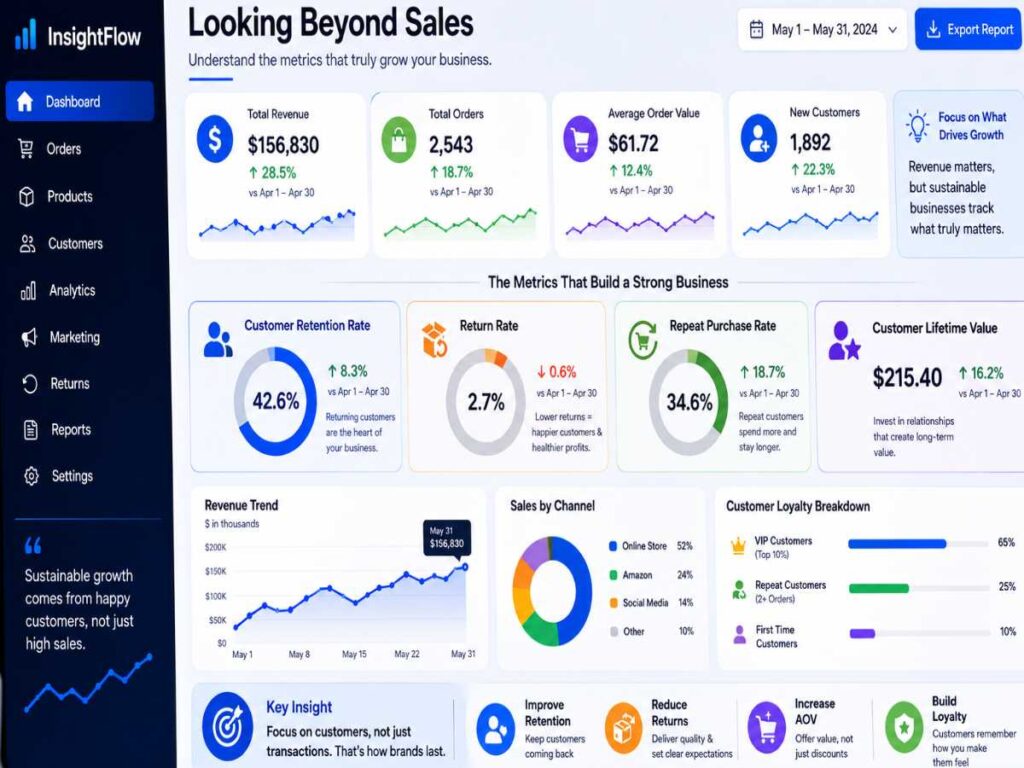
Businesses need to focus on sales numbers, but the actual performance of an e-commerce business is not judged by the revenue alone. There can be problems with high sales, such as lower customer retention, higher product returns, or customers depending more on discounts. That’s why successful sellers focus on factors such as the number of loyal customers, product return rate, and how to increase order value. They don’t focus only on the revenue. Sellers should review the current month’s revenue and other metrics to understand their store’s performance. The small insights build the foundation for a long term business growth.