Retrofitting Patio Cooling Systems in Phoenix for June Heatwaves
By early June, Phoenix homeowners step onto their patios and feel a wall of heat radiating from concrete, pavers, and walls. Even shaded backyards quickly become uncomfortable as the afternoon sun pushes temperatures well past tolerable levels. The challenge is not only direct sunlight but also the heat that builds up and lingers in outdoor living areas, making patios nearly unusable during peak hours. Retrofitting patio cooling systems offers a direct response: by targeting the specific ways heat accumulates and stays trapped in backyards, these systems help residents reclaim outdoor spaces at the height of summer. The right setup can noticeably drop the felt temperature, letting families enjoy grilling, dining, or relaxing even as the city swelters.
Phoenix June Heatwaves and Backyard Thermal Challenges
In Phoenix, June brings some of the highest average temperatures of the year, with prolonged heatwaves pushing backyard surfaces to absorb and radiate heat long after sunset. The desert climate means minimal evening relief, as stones and patios slowly release stored warmth. Homeowners notice that shaded areas alone do not resolve the problem, since radiant heat still elevates the overall temperature in these zones. Understanding the specific heat retention characteristics of local materials—such as flagstone, concrete, and stucco—helps guide which cooling approaches will be most effective. Addressing these thermal challenges often requires more than traditional shading or fans, as these solutions struggle against the sheer intensity of heat that accumulates in June.
Comparing heat absorption rates of common patio materials helps readers identify why some surfaces stay hot and how cooling systems should be positioned for maximum effect. Recognizing these unique local challenges is the first step toward identifying a retrofit solution that genuinely lowers temperatures in Phoenix backyards.
Retrofitting Cooling Technology for Residential Outdoor Spaces
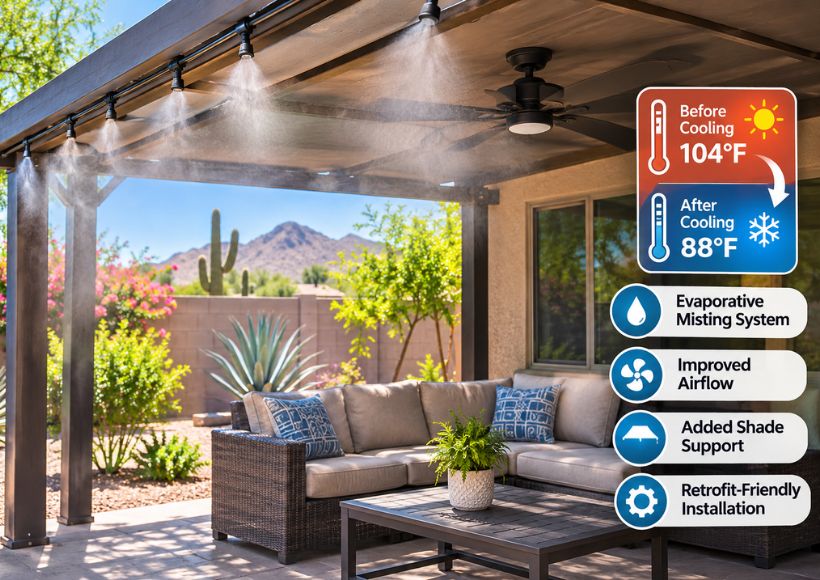
Retrofitting an existing patio with a cooling system involves evaluating the current layout and selecting technology that integrates cleanly with existing structures. Homeowners often look for systems that can be added to pergolas, awnings, or along the eaves of their homes without major reconstruction. For Phoenix properties, water misting lines are a common retrofit option because they disperse fine droplets that rapidly evaporate and remove heat from the air. This process, called evaporative cooling, is highly effective in the region’s dry climate.
Installation usually includes mounting misting lines along the perimeter of the patio roof or fencing, ensuring that the coverage area matches where people gather. Some systems also feature timers or smart controls, letting users activate cooling only during the hottest hours. Easy-to-install kits can often be adapted to unique backyard layouts, making retrofitting possible even for irregularly shaped spaces. Homeowners considering Patio Cooling Systems in Phoenix find that these retrofit solutions provide a practical response to extreme heat by focusing on the immediate zones where comfort matters most. Such a system delivers consistent relief for residents seeking to use their patios throughout the summer.
Evaporative Mist Systems and Airflow Optimization Techniques
Evaporative mist systems work by releasing ultra-fine water droplets into the hot air, which then absorb heat as they evaporate, effectively lowering the ambient temperature. In Phoenix’s arid climate, this method can make outdoor areas feel significantly cooler in minutes. For best results, the placement of misting nozzles must be planned to avoid oversaturating surfaces or leaving areas uncovered. Combining misting with natural or mechanical airflow—such as outdoor ceiling fans or strategically placed vents—helps distribute cooled air and prevents humid pockets from forming.
Optimizing airflow not only increases the efficiency of the cooling system but also enhances overall comfort, as moving air accelerates evaporation and disperses heat more evenly. It is important to balance mist density and airflow speed to ensure a refreshing environment without excessive moisture. According to evaporative cooling system best practices, regular maintenance, such as cleaning nozzles and checking water supply lines, further ensures reliable performance throughout the season.
Sustaining Comfortable Backyard Environments During Peak Summer Temperatures
Maintaining a comfortable backyard during a Phoenix June heatwave means more than just installing a cooling system—it requires sustained operation and thoughtful use. Many retrofit cooling setups include programmable timers, which automate system activation during the hottest parts of the day and reduce water usage by running only when needed. Some homeowners install wind sensors that pause misting during gusty conditions to avoid water waste and ensure consistent cooling.
Incorporating shade structures, such as retractable awnings or UV-resistant sails, alongside misting systems further reduces radiant heat and extends the usability of outdoor spaces. Plants and landscaping can also play a role by absorbing heat and providing evaporation from leaf surfaces. By layering these approaches with a well-installed cooling system, homeowners create an environment that remains pleasant for outdoor gatherings, even when daytime highs reach their annual peak.
Conclusion
For Phoenix residents ready to reclaim their patios during June’s most punishing heat, the next step is to assess which surfaces and gathering spots suffer most from heat buildup. Starting with a retrofit-friendly misting system tailored to your backyard’s layout will deliver immediate comfort and make outdoor living viable all summer long.