How Hiring Plumbers in Fort Lauderdale, FL Prevents Coastal Saltwater Intrusion Damage
Homeowners living along Fort Lauderdale’s coastline often deal with a unique problem: saltwater intrusion into their plumbing systems. This occurs when saltwater from the Atlantic or nearby brackish canals seeps into freshwater pipes, corroding metal, damaging fixtures, and threatening water quality. Signs like metallic-tasting tap water, recurring leaks, or unexplained pipe deterioration can point to saltwater infiltration. Residents who notice these issues need a targeted solution. Hiring professionals with experience in South Florida’s coastal conditions is the best way to protect a home’s plumbing from saltwater’s harsh effects and prevent costly structural damage.
Coastal Saltwater Corrosion Risks in Fort Lauderdale Plumbing Systems
Saltwater contains minerals and salts that rapidly corrode traditional metal pipes, especially older galvanized steel or cast iron found in many Fort Lauderdale homes. The continual exposure to humid, salty air increases the risk of rust and pinhole leaks, which can go unnoticed until significant damage occurs. One example is the accelerated wear seen in cast iron sewer lines running beneath properties close to the Intracoastal Waterway. Deterioration in these lines can cause blockages, water contamination, and even foundation problems.
Addressing corrosion early requires expertise in both identifying subtle signs and recommending replacement with more resilient materials. Homeowners may not recognize when a pipe has reached the point where cast iron repair is no longer feasible, leading to repeated leaks or water discoloration. Understanding the specific risks posed by coastal conditions, as explained in saltwater corrosion in plumbing systems, helps property owners and professionals make informed decisions about timely upgrades and repairs.
For properties in high-risk zones, regular assessments by plumbers familiar with local corrosion patterns are critical. They can spot early evidence of damage that might otherwise be missed and propose tailored solutions based on the property’s unique exposure to salt air and water.
Professional Pipe Inspections Stopping Brackish Water Seepage
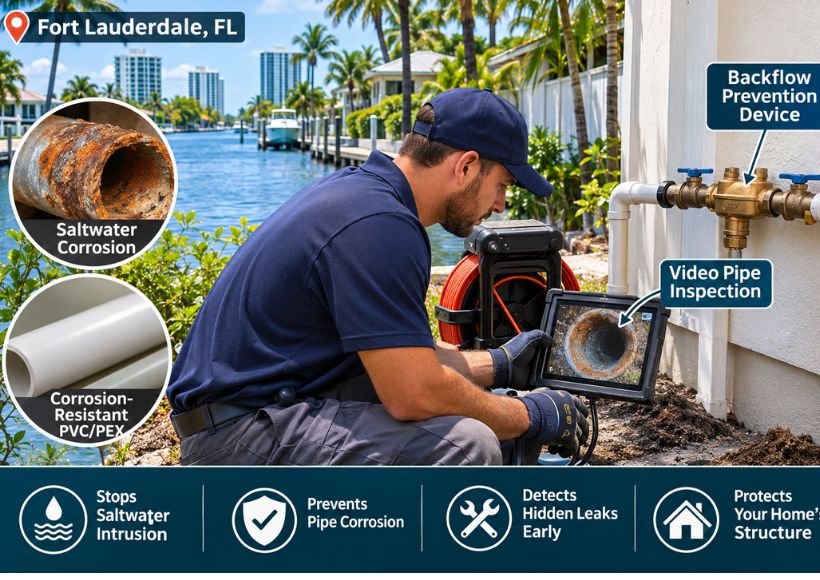
Saltwater intrusion often starts gradually, with brackish water seeping through underground cracks or pipe joints compromised by soil movement or aging materials. Plumbers in Fort Lauderdale FL use diagnostic tools like video pipe inspection to pinpoint exactly where saltwater is infiltrating the system. These cameras can reveal mineral buildup, corrosion, and even small fractures inside pipes that are invisible from the surface.
Timely inspections allow professionals to isolate problem areas and recommend targeted repairs—such as trenchless lining or section replacements—before intrusion leads to full pipe failure. For example, a slow leak in a sewer lateral beneath a yard might only be discovered during a scheduled inspection, preventing backflow and property damage. For homeowners, this means less disruption and lower repair costs compared to emergency fixes after a major failure.
Details about video pipe inspection methods provide insight into how these technologies detect hidden problems and support proactive maintenance planning.
Backflow Prevention Strategies for South Florida Properties
Backflow, the unwanted reversal of water flow that can draw contaminated saltwater into household plumbing, is a real danger in low-lying coastal areas. Professional plumbers install and maintain backflow prevention devices—mechanical valves that block saltwater from entering freshwater lines during events like tidal surges or heavy rainfall. These devices are tailored for South Florida’s unique elevation and flood risk profiles, ensuring that even during a storm, brackish water cannot enter the home’s supply.
Hiring Plumbers in Fort Lauderdale, FL ensures these critical devices are installed according to local codes and tested annually for effectiveness. This regular maintenance helps property owners avoid health hazards and costly plumbing repairs associated with saltwater contamination. A qualified plumbing team can also recommend upgrades or new technologies as local building requirements evolve, providing ongoing protection.
For coastal homeowners, this backflow prevention work makes the difference between clean, safe water and the risk of hidden saltwater damage. A plumbing specialist’s expertise in these solutions is essential for long-term property health.
Local Plumbing Materials Resisting Marine Environment Decay
Material choice is key in resisting saltwater’s corrosive effects. Modern plumbers recommend non-metallic piping—such as PVC or cross-linked polyethylene (PEX)—for both new construction and replacements in coastal environments. These materials do not rust and are highly resistant to chemical breakdown, making them ideal for homes near the ocean or brackish canals.
For older homes that still rely on cast iron, targeted cast iron repair or full replacement is considered after assessing the extent of corrosion. This approach helps preserve the property’s structure while preventing recurring water leaks and minimizing future maintenance. Selecting the right material also supports compliance with updated building codes that address coastal durability and environmental impact.
Staying informed about corrosion-resistant plumbing materials allows homeowners to make smart investments when repairing or upgrading their systems. A knowledgeable plumber will help navigate these choices and ensure that every component is suited to withstand Fort Lauderdale’s marine climate.
Conclusion
To protect your Fort Lauderdale property from the damaging effects of coastal saltwater intrusion, prioritize regular pipe inspections and invest in proven backflow prevention solutions. Consulting a local plumbing professional with experience in marine environments is the most effective way to catch issues early and select the right materials for long-term resilience.